Saturday, August 29, 2015

49th Anniversary of the Last Beatles Concert: Candlestick Park


"It was like being in the eye of a hurricane, so there was never a time when you thought, you thought, 'what's going on?' you know, that's it, that was about as deep as it got, 'what is happening?' or what, you'd suddenly wake up in the middle of one, a concert or a happening and you think 'How did I get here?' you know 'the last thing I remember was playing music in club and then next minute this' but we never thought about it too much, because it was an ongoing thing, it was happening to us and it was hard to see, and we were just in the middle being ushered from room to room." -John Lennon, 1975

Candlestick Park in San Francisco, California became the last place to witness the glory of The Beatles live in concert. With the exception of the rooftop performance atop Apple Studios near Piccadilly Circus in London in January of 1969, this day marks the last time John, Paul, George, and Ringo played together to a roaring crowd of thousands. It's now a bygone era, one that can never be recaptured and that fans like me are continually trying to understand in addition to, I suspect, Paul and Ringo who are still trying to understand. The tours only lasted four years, barely spanning 1962 to 1966, with only two of those years consisting of international gigs. Candlestick Park was the tipping point for the boys. In The Beatles Anthology and subsequent interviews after the Beatles' split, the concerts get a bad wrap. By 1966, The Beatles were struggling to generate relevant music for a changing decade as thousands of young girls screamed for the long-gone music of who had increasingly become emotionally and intellectually much older men. Experimentation with drugs, London's underground culture, and Eastern philosophies changed the band's dynamic and goals. John was only a few short months away from recording the game-changer: "Strawberry Fields Forever." With this song, the bopping black and white mop-tops were faded like the television screens they graced in 1964 while the brightly colored soldiers of Sgt. Pepper entered the fray. The point is, with the final concert at Candlestick Park, The Beatles fundamentally changed in every way. 

But let's not be too hasty to skip the touring years in favor of the psychedelic creative energies to come in the latter half of their career. John, with the quote above, might have felt overwhelmed by Brian Epstein's relentless touring schedule, but it deserves so much more credit than it gets. The diverse song-scape of the post-1966 Beatles often beats out the earlier years in terms of interest and study. But without the incredible momentum generated by girls mercilessly separating their hair from their scalps, beginning in the dark, dank clubs of the Reeperbahn in Hamburg, Germany, the genius that we now understand as the  four lads who shook the world would have been more than understated; it would have been nonexistent. 

And so, it is on the 49th anniversary of this momentous occasion that I make the case for the early Beatles. The prequel is just as important as the sequel in most cases, and understanding the chaotic whirlwind of a 1960s rock n' roll tour makes the second half of The Beatles' career that much more meaningful. It explains everything, the choices they made in their music, the subject matter of their songs, the entire message they projected to the world, which because of their fame, affected every corner of the globe. Epstein's touring created the vacuum that allowed The Beatles to flourish in every way. 

Wednesday, May 6, 2015

New Beatles Documentary!


Ron Howard, the sweet little boy Opie on The Andy Griffith Show and director in his own right, has completed his latest endeavor, a new Beatles documentary. The film, which is yet unnamed, is set to premiere at the Cannes Film Festival in France later this year. Howard's project, in full cooperation from Paul McCartney, Ringo Starr, Yoko Ono, and Olivia Harrison, aims at telling the inside story of The Beatles' touring years, from 1963 to 1966, with special emphasis placed on the February 1964 Ed Sullivan performances in New York City. Look at the link below for more details!

http://variety.com/2015/film/news/ron-howards-beatles-documentary-to-launch-sales-at-cannes-1201487328/

Wednesday, April 1, 2015

John and Cynthia


Cynthia Lennon Dies at Age 75

It has now been confirmed by Julian Lennon, John and Cynthia's son, that his mother passed away today at the age of 75 after a long battle with cancer.

Cynthia Powell was born on September 10, 1939 in Blackpool, Lancashire to Charles Edwin and Lillian Powell. She was raised in a middle-class area called Hoylake, Wirral across the Mersey River from the port city of Liverpool. A budding artist at young age, Cynthia's talent was further developed at the age of twelve when she was accepted to the Junior Art School near the Liverpool College of Art. Despite financial pressures on the family following the death of her father in 1956, Cynthia was able to continue in her artistic pursuits and enrolled in the Liverpool College of Art in 1957 where she met an obnoxious but brilliant fellow student, John Lennon.

Their meeting was as unromantic enough; John supposedly simply tapped her on the shoulder in art class one day and introduced himself, "Hi, I'm John." Cynthia remembers in her autobiography, A Twist of Lennon, that she was instantly drawn to him, even dying her hair blonde after hearing him remark that he like blonder girls that looked like Brigitte Bardot. A simple meeting for such a complicated relationship.

Cynthia and John began dating in the summer of 1958, commencing a turbulent and sometimes abusive relationship. She cites instances in which John would slap her, but also maintained that they intensely loved each other nonetheless. John, she says, was always quick to make up for it (as if that makes it ok...?).

By the time The Beatles were preparing to embark on their transformative stint in Hamburg, Germany, Cynthia and John were inseparable. She accompanied the band (then made up of John, Paul McCartney, George Harrison, Stuart Sutcliffe, and Pete Best) along with Paul's girlfriend, Dot Rhone. Cynthia, in her autobiography, recalls very interesting stories about dingy nights in the clubs of the Reeperbahn.

When The Beatles returned to Liverpool, Cynthia moved into Mendips, John's Aunt Mimi's home, to be closer to John but also because her mother had decided to move to Canada. The Beatles set out yet again to Hamburg for the last time in 1962, upon which she moved out of Mendips and into a flat with Dot. Cynthia, after graduating from the Liverpool College of Art, pursued teaching. In July of 1962, she learned something that would change her life in ways she could hardly imagine-she was pregnant.

John and Cynthia married in that same month, with incredibly fierce opposition from Mimi. Still, her pregnancy could not have come at more hectic time, as The Beatles that next month were finally completed and recording in Abbey Road Studios in London with EMI Records and George Martin. Julian Lennon was born April 8, 1963. John was away on tour.

Cynthia was there for the most frantic of time for The Beatles as they were catapulted into international music stardom. She landed with them at JFK Airpot in February 1964 for the Ed Sullivan Show, tried LSD in 1965 with her husband, and was followed incessantly by fascinated reporters hailing her as "the Beatle woman." Still, more often than not, she was left at home, taking care of her young son essentially as a single mother. Julian grew up without John, who only reconnected with him a few months before John's death in 1980. Cynthia and John divorced in 1968, upon which John (in)famously married Japanese artist Yoko Ono.

Still, Cynthia has remained fairly open about her years as the wife of one of the most legendary music icons and as a witness to the development of the most famous band of all time, writing autobiographies and directing documentaries.

CYNTHIA LENNON 1939-2015

Tuesday, February 17, 2015

Paul sings "All My Loving" at a Secret Valentine's Day Concert in New York City!


Well, it happened again. Paul McCartney played a pop-up show in a small, intimate setting...about three thousand miles away from me. This Valentine's Day, Paul and Beatles fans alike had the opportunity of a lifetime to see the legend play in a small venue for only $40. Paul, who usually hosts sold-out mega arenas, said that the small audience size was a welcome change, though he remarked that they now to can see how old he actually looks. This is particularly painful for me because when living at home in London, Paul is known to play pop up shows as well, most recently in the Apple Market at Covent Garden. The one time I live in London, Paul tours the United States...well, you can't win them all, I guess. Here's the link to his performance of the 1963 Beatles classic, "All My Loving" below:

http://blogs.wsj.com/speakeasy/2015/02/15/paul-mccartney-plays-secret-valentines-day-show-in-new-york/

Monday, February 16, 2015

Paul McCartney sings "Maybe I'm Amazed" at Saturday Night Live's 40th Anniversary


In honor of Saturday Night Live's 40th show, Paul McCartney, who has been a regular musical guest on the comedy late night show, performed his first single, "Maybe I'm Amazed." Additionally, Paul and Paul Simon of Simon and Garfunkel graced us with a rendition of the 1965 Beatles classic, "I've Just Seen a Face." Just as a side note, I met with Rusty Anderson, the lead guitarist in Paul's band in December! So cool!

Wednesday, February 11, 2015

This Day in 1963

On February 11, 1963, The Beatles began recording their very first LP, Please Please Me at Abbey Road Studios in London. Fifty-two years later, Please Please Me stands as the world's first taste of the glory that was The Beatles. The marathon recording session lasted nine hours and forty-five minutes, taking up three sessions, an unthinkable amount of time for an emerging and unknown band.  "Twist and Shout," one the band's most famous songs (though it is the more famous covers of the Isley Brothers' original) was recorded last, so the ripping vocals from John would not ruin him for the rest of the session. All in all, Please Please Me features some of the most beloved of Beatles songs, including, "Love Me Do," "I Saw Her Standing There," and "Do You Want to Know a Secret," and excellent start to legend.

Sunday, December 28, 2014

George Honored With Lifetime Achievement Grammy!


For the 57th Annual Grammy Awards, the Recording Academy has chosen to honor George with the Lifetime Achievement Award. The ceremony will take place in Los Angeles on February 8. How great is that? Check it out here:

http://www.jambands.com/news/2014/12/28/george-harrison-honored-with-lifetime-achievement-grammy/

Thursday, October 9, 2014

Happy 74th Birthday John Lennon!


"Living is easy with eyes closed, misunderstanding all you see."

1967 was a transition period for The Beatles. Following the release of Revolver in 1966, the music that powered out of Abbey Road Studios in St. John's Wood, London was vibrantly new and unequivocally revolutionary. 1967's Sgt. Pepper's Lonely Hearts Club Band has consistently been voted the greatest rock 'n roll album of all time by Rolling Stone and the like. From there, the Fab Four moved up into a broader stratosphere of music and meaning, knocking the barriers down of what a rock song could be and expanding the range of popular music. The results are legendary. But it all started with a man named John and his guitar.

John Winston Lennon was born on October 9, 1940 in the district of Merseyside in northwestern England, in the dirty and bombed-out port city of Liverpool. Born into the rage of Hitler's Blitz on England during World War II, John was quite lucky to make it through his first few years of life. From his early years on, John led a troubled life, beginning with an incredibly dysfunctional family that split when he was just four years old. At this tender age of four, John was asked to choose who he wanted to spend his life with, his mum or his dad. Though he initially chose his father, who would have taken John to live with him in New Zealand (an alternate history if there ever was one), he changed at the last minute and ran to his mother, Julia. It was at this point that Julia's older sister, Mimi, intervened and took the distraught boy. Julia didn't put up much of a fight and took up with another man and had two daughters. Mimi, Aunt Mimi as John called her, raised John until he was seventeen years old and had an incredibly important impact on John's life and by extension his love affair with music.

This was just the beginning of John's confusion growing up. Mimi, though loving in her own way, was a very harsh mother figure to grow up with. John's almost chronic need to rebel (from cutting school to riding atop buses around Liverpool) clashed magnificently at times with Mimi's pre-war British mindset. But at the same time, Julia lived just a couple hours' walk away in Blackpool with her new family. When she chose to reenter John's life when he was just sixteen, John was caught between two families that more closely resembled warring factions. Conservative Mimi, who still had trouble forgiving her younger sister for virtually abandoning her toddler son, and the free spirit of Julia pulled John in two different directions, leaving an empty vacuum within him that would only be filled by music.

Julia's appalling parenting skills aside, her influence on John was extraordinary. She provided the music legend's first encounter with music, teaching him the Liverpool folk song, "Maggie Mae" on the banjo. She took John to see Elvis Presley on screen, giving him that first taste of rock n' roll, a taste that would never be satiated. She gave John the freedom he always wanted but never got from the rigid life of living with Aunt Mimi at Mendips. It's pivotal that Julia's reappearance in John's life, at such a malleable point in his life, coincides with his meeting of a boy from Woolton, Liverpool who was about two years younger, but could rock harder on the guitar than anyone he had ever met.

John met Paul McCartney at a church fete in St. Paul's Church on a bright summers day in 1957. John had transitioned to the guitar at this point (a guitar that Mimi had bought him) and had gotten his first gig with his high school band, The Quarrymen. Paul, a quiet and well-dressed fifteen-year-old happened to have a mutual friend with the frontman of the band. It's really thanks to Ivan Vaughan, an obscure figure in Beatles history, that John and Paul even met. Paul impressed and intimidated John with his skills on the guitar and his singing, and later that week half of what would become The Beatles was practicing barre chords on John's back porch.

As if the stars had aligned, Paul's schoolfriend George Harrison could also play the guitar, better, Paul told John, than anyone he knew. George famously tried out for the role of lead guitar by playing "Raunchy" on the top deck of a bus late at night in Liverpool after hearing the Quarrymen play a gig. Though only fourteen, George's skill on the guitar earned him a rightful place in the band and three-fourths of the Beatles were together.

But just as everything was matching up for the first time in John's life, it took a turn for the worst. John had repaired his relationship with Mimi, one of the people who cared most passionately for him, and Julia and was beginning to see a future with both of them in it. On her way back from Mendips in 1958, Julia was struck by a speeding car and killed instantly. For a time, it seemed that the dream of starting a band that would be as big as Elvis was over. For the incredibly important relationship that John and Paul had, both personally and musically, Julia's death deeply cemented their friendship and connection. Paul's mother, Mary (yes, Mother Mary in 1970's "Let It Be") had died of breast cancer when Paul was just twelve. Paul and John comforted each other in their times of trouble and grief.

Overcoming his grief of losing his mother twice, John, Paul, George, and Pete Best (their original drummer) ferried over to Hamburg, Germany to play their first gig at the Indra Club in the St. Pauli district. The Silver Beetles at this point, their time while in Hamburg served as a sort of baptism-by-fire and greatly tightened their skills as a performing group. The late teens would work full days and nights, taking pills to stay awake but performing sets that they would play later on in the 1960s. But Hamburg is significant for other reasons. It was the place where they first met the last member that would make the Fab Four (much to the detriment of poor Pete Best), Ringo Starr. Already a member of a more popular Merseyside band, Rory Storm and the Hurricanes, Ringo filled in for Pete when he was too ill to perform. Paul remembers that when Ringo would play with the three of them, it just seemed to click. By the time the band was ready to return to Liverpool and begin playing sets at the famed Cavern Club, Pete was not matching up to par.

Other than Abbey Road Studios and Hamburg, the Cavern Club is easily the most significant Beatles location, and still serves as a pilgrimage site for Beatles fans the world over. John, Paul, George, and Pete were playing at the steamy, underground night club when a little known record store owner, Brian Epstein, was asked if he had any Beatles records in stock. Curious, he sought out The Beatles and watched them perform in the Cavern. What he saw when he descended down the winding staircase and into the overcrowded club, we can only imagine. Four young lads decked out all in black leather and cowboy boots rocking out to Little Richard's "Long Tall Sally" must have been a sight. But it electrified Epstein and he chose to abandon his family's record store and offer his services as manager of The Beatles. It is thanks to Epstein that George Martin, EMI Records producer, even agreed to meet with them. But by August 1962, Ringo Starr had officially replaced Pete Best as drummer and the Fab Four were headed to Abbey Road Studios in London to cut their first single, "Love Me Do" and later record, Please Please Me.

From the start, John felt the need to be the head of The Beatles, even over Epstein. As the one who started the group, John saw it as his band. But the point, Epstein and Martin maintained, was that unlike other guitar groups of the day, The Beatles were all the head of the band, equal members that contributed equally to group (at least appearance-wise). They were the Fab Four, not Gerry and the Pacemakers. This often led to conflict with John and Epstein, who clashed over the suits that they were made to wear and the bowing they did after every show.

Touring took a toll on John, like the others. Epstein, a brilliant public relations man, created a relentless touring schedule for The Beatles, spanning the globe. But by 1966, The Beatles were ready to move away from the screaming fans and into the quiet creativity of Abbey Road Studios. John and Paul's artistic tension blossomed during this period. When John wrote "Strawberry Fields Forever," Paul would respond with "Penny Lane," and so forth. John's songwriting was very much characterized by responses to Paul's happy-go-lucky style, a deep attachment to introspection (though "I Am the Walrus" might be an exception), and the taking of inspiration from the environment around him.

After The Beatles broke up in 1970, John led a troubled and brief life. After divorcing his first wife Cynthia, John married the Japanese artist, Yoko Ono and had one son, Sean in 1975. As for his three best friends, George, Paul, and Ringo, he never played or recorded with them again. Their friendship was only repaired a year or so before tragedy struck. On December 8, 1980 at 11:50 pm, John Lennon was shot by Mark David Chapman outside the Dakota Building in New York City. He died on the scene. It was a senseless ending to a complicated and beautiful life.

Through all of the problems that John had growing up, music always made sense for his life. Music put right the chaotic world of John Lennon and the turbulent 1960s. His contributions to music cannot be understated and it's on his 74th birthday that we remember his life. Happy birthday, John.

JOHN LENNON 1940-1980

Monday, September 22, 2014

Song of the Day: Cayenne (The Beatles Anthology, 1960)

This is a bit of a different post tonight, as this song is not technically a Beatles song. "Cayenne" is one of the first songs that Paul McCartney ever recorded, laying down the track in 1960 at his home on Forthlin Road in Liverpool. The song has a bit of a western vibe going for it and only lasts about a minute and a half. Though three out of the four Beatles can be heard playing on the record (Ringo would not join the band until August 1962), they were not calling themselves The Beatles by this point. The name went through various changes, starting in 1957 as The Quarrymen and moving along to the Silver Beetles until finally becoming the legendary Beatles around 1961. The song itself is not very well known, but it's possible to discern the very distinct style that would characterize their music for the next decade.

Tuesday, September 16, 2014

This Day in 1963

On September 16, 1963, George Harrison became the first Beatle to set foot in the United States-indirectly a big moment for Beatles history. George was the youngest of the Harrison children, with two older brothers and an older sister, named Louise. Louise moved to Benton, Illinois with her husband in the early 1960s, far before The Beatles made it big in the United States in 1964. At the time of his visit, The Beatles had enjoyed a year of Beatlemania back home in Britain, but they were still unknown in the United States (they hadn't even been heard yet on the radio waves-first gracing them, that November.) George was able to walk the streets of Benton incognito, shopping, eating, and even jamming with a local band (how cool is that ?!!). It was most likely the last time George was able to walk in public like an ordinary person, something he would cherish dearly in the next few years of Beatlemania. The above picture is the only picture that exists of George's relatively unknown trip to the United States.

Thursday, September 11, 2014

Come Together

One, two, three, FOUR!

There are places I'll remember all my life though some have changed. Some forever not for better. Some have gone and some remain...But of all these friends and lovers, there is no one that compares with you and these memories lose their meaning when I think of love as something new...I know I'll often stop and think about them. In my life, I've loved you more.

There are times when all you want to say is encompassed perfectly in a song. But for me, almost all I want to say is perfectly expressed in a Beatles song. This is my first blog post in London, the city that has seen so much and radiates history from its walls. But as I walk around the streets of this great metropolis all I can think of is four twenty-somethings arriving in London from Liverpool to record for the very first time in Abbey Road Studios, strutting about the alleyways following their first number one, dodging screaming fans as Beatlemania cascaded down upon them, leaving Heathrow to fly into JFK International Airport in New York, spending days holed up in the studio recording legendary tracks, walking across the street, and finally performing for the last time to the world on the rooftop of Apple Studios. London itself, is the center of The Beatles, seeing their tentative beginning and modest but incredible end. T

The London scene in the 1960s was a magnificent place to be in world history even without The Beatles' contribution. To be here studying history and with a big place for the Beatles in my heart, is more than I ever could have hoped for. I feel closer to them than ever, despite the fifty-year gap between our lives.

Hopefully, I will be inspired to be a better blogger living here! I'll try to post pictures as much as I can.

Sunday, August 10, 2014

PAUL MCCARTNEY AT DODGER STADIUM TONIGHT!!

That's right. Sir Paul will be at Dodger Stadium in Los Angeles, California at 8 pm during his time in the US for his tour "Out There." Who else will be there? ME. In a few short hours Paul will run out on stage and I will see him for the first time with my own eyes, not through a screen or the lens of a camera. I'll try to post pictures, I promise.

P.S. I've had a busy summer, and I'm sorry I haven't posted in what seems like and eternity.

Monday, June 16, 2014

Song of the day: I Will (The White Album, 1968)

In honor of Paul McCartney's 72nd birthday on Wednesday, I'm going to post some of my favorite Paul compositions of The Beatles this week. Here is the White Album's (The Beatles for sticklers) "I Will" from 1968.

Friday, June 6, 2014

This day in 1966

On June 6, 1966, Paul McCartney recorded the final dubbing for Revolver's "Eleanor Rigby." This is also a few months before "Paul is Dead" conspirators believe Paul was killed in his Aston Martin in a car accident and Billy Shears took over as the Beatle. Just as a side note, today is the 70th anniversary of the D-Day landing on the beaches of Normandy in France.

Thursday, June 5, 2014

This day in 1964


On June 5, 1964, The Beatles arrived in Holland at the Schipol Airport, where they immediately went to a press conference. From there, they were driven to Hillegom to record a program for VARA-TV. In addition, they answered questions at the Cafe-Restaurant Treslong from the audience. What started as a fairly routine performance, turned into a conflict, as the picture above displays. By the sixth song, the audience came on stage and completely smothered them while playing. The audience was resilient and was not able to be ushered off, causing The Beatles to leave. This performance was watched from afar in London by Ringo, who was recovering in the hospital after having his tonsils removed. Jimmy Nichols was filling in as drummer during this period. The Beatles were experiencing even higher levels of mania since they were last on the European mainland in 1963. They had only recently returned from their now legendary first US tour in which they performed to 73 million on the Ed Sullivan Show.

Wednesday, June 4, 2014

This day in 1963

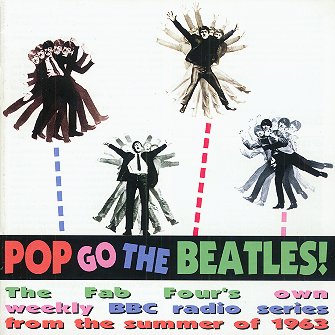
On June 4, 1963, the first broadcast of The Beatles' own BBC radio series, Pop Go The Beatles! was aired. 1963 was the year Beatlemania broke out and as a result, a whopping 2.8 million people listened to that first broadcast. The boys' popularity would only go up from here. In addition, The Beatles travelled to the north of England to the Town Hall in Congreve, Birmingham.

Monday, May 26, 2014

Let's play catch-up.

So sorry for the month-long break on my blog, folks. Since I last posted, a lot of things have happened, both in my life and in Beatles news, some good and some bad. Let's catch up then, shall we?

I finished my first year at Pepperdine University on April 24, and am now currently in the waiting stage between the end freshman year and my sophomore year in London! I leave September 3, and I can't wait! Look out London (and Liverpool, obviously)!

Next, I have big news. Paul McCartney has been on his "Out There" tour for most of this spring, beginning in Latin America and moving through Asia. You've probably heard that he had to cancel his Japanese tour dates, which included his second-time ever performance at the Budokan Theater that the Beatles graced in 1966, as a result of contracting a virus infection. It was very serious for a couple of days, so serious that he was hospitalized earlier this week. But, all is well again and he is scheduled to resume his tour in Lubbock, Texas on June 14, the home of Buddy Holly! About two months after that,  Paul will perform at Dodger Stadium in our very own, Los Angeles, California. And, yes. I WILL BE SEEING PAUL MCCARTNEY IN CONCERT ON AUGUST 10th AT DODGER STADIUM! It's official. I'm looking at the tickets right now. It doesn't feel real yet and I can't even begin to describe what it feels like to hold a former Beatles' ticket in my hand. I just have one more thing to say: "Yeah, yeah, yeah!"